MiSight vs. Stellest: Which FDA-Approved Myopia Treatment Is Right For Your Student?
As children grow, their vision can change quickly, especially during their school years. If your child frequently needs stronger glasses or struggles to see the classroom board, progressive myopia may be responsible. Fortunately, advancements in myopia management have introduced treatments designed to slow nearsightedness progression.
Two options are MiSight 1 Day contact lenses and Essilor Stellest eyeglass lenses. Both have FDA authorization for myopia control, but they work differently. Understanding these differences can help families make informed decisions.
Why Is Myopia Control Important for Children?
Myopia, or nearsightedness, occurs when the eye grows too long, causing distant objects to appear blurry. It often begins during childhood and can worsen as children develop.
Unlike traditional glasses that simply correct blurry vision, myopia control treatments aim to slow prescription changes. Managing progression early may also help reduce the risk of complications associated with high myopia later in life, including retinal detachment and other eye conditions.
MiSight 1 Day: Contact Lenses for Myopia Control
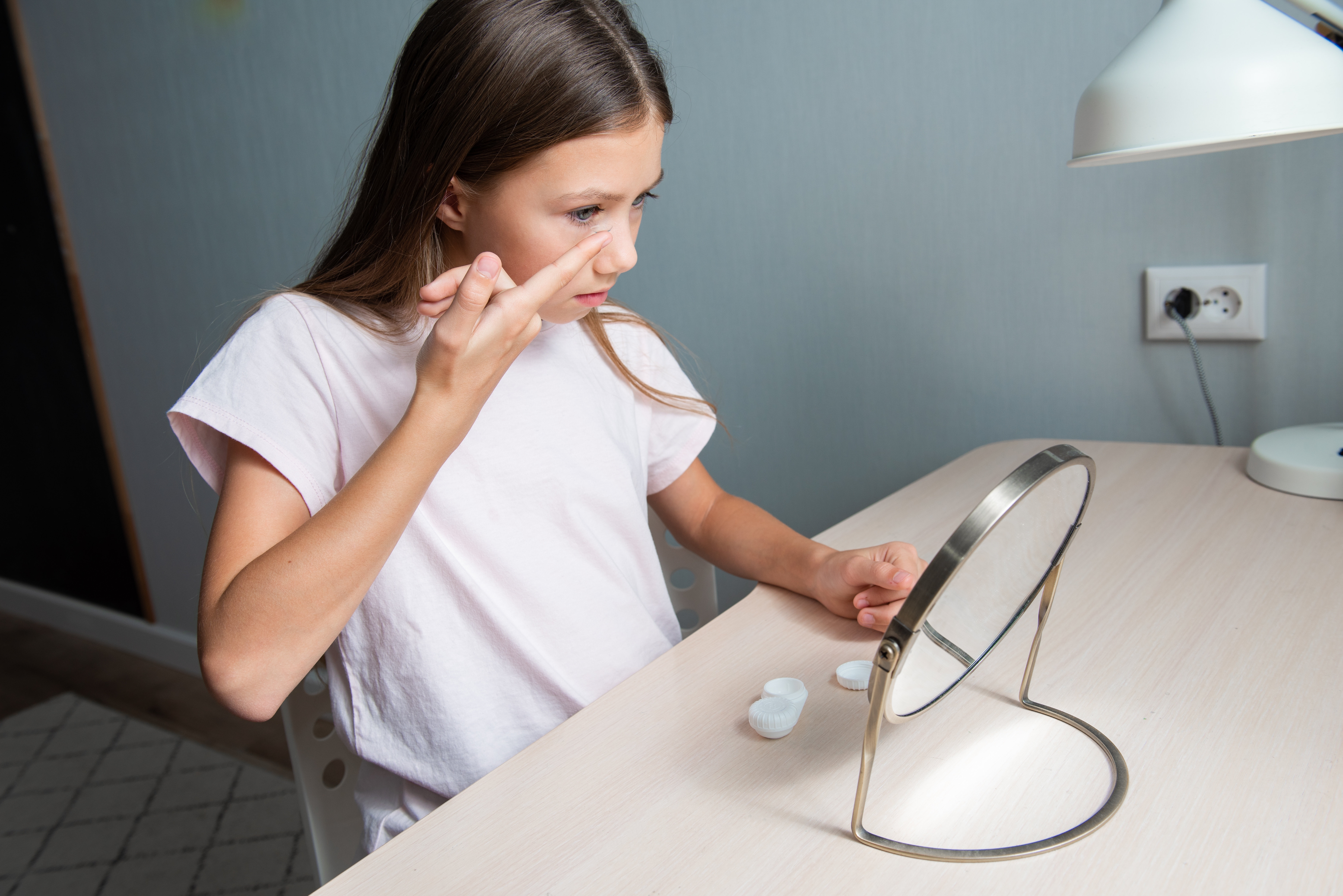
MiSight 1 Day lenses are FDA-approved soft contact lenses designed to correct nearsightedness while slowing its progression in eligible children. These daily disposable lenses use specialized optical zones that help manage how light focuses within the eye.
MiSight may be appropriate for children who:
• Are between 8 and 12 years old when starting treatment.
• Have a qualifying nearsighted prescription and limited astigmatism.
• Feel comfortable learning to insert and remove contact lenses.
• Can consistently follow proper contact lens hygiene.
• Prefer contact lenses over glasses for school, sports, or other activities.
Because MiSight lenses are replaced daily, they do not require overnight storage or cleaning solutions. However, children must avoid sleeping, swimming, or showering while wearing them.
Stellest: Specialized Eyeglass Lenses for Myopia Management
Essilor Stellest lenses offer an alternative for children who prefer glasses or are not ready for contact lenses. These FDA-authorized lenses use Highly Aspherical Lenslet Target (H.A.L.T.) technology to provide clear vision while creating an optical signal designed to slow excessive eye growth. Stellest lenses are authorized for eligible children ages 6 to 12 when starting treatment, including certain prescriptions with astigmatism.
Unlike standard single-vision glasses, Stellest lenses are specifically designed for myopia control. They may be particularly appealing to younger students or families seeking a non-contact-lens approach.
MiSight vs. Stellest: Which Option Is Better?
Neither treatment is automatically better for every child. The right choice depends on several individual factors. MiSight may work well for responsible students who enjoy activities without glasses and can maintain a consistent contact lens routine. Stellest may be more convenient for children who prefer wearing glasses, have difficulty handling contacts, or are younger than the approved starting age for MiSight.
Prescription strength, astigmatism, eye health, and daily habits also influence eligibility. Both treatments require consistent use and regular monitoring, and neither guarantees that myopia will stop progressing.
How Can an Eye Exam Help Determine the Right Treatment?
At MK Vision Center, our myopia control evaluations assess prescription changes, eye health, family history, and lifestyle factors. We use this information to help families understand suitable treatment approaches and monitor their child's vision over time. Regular follow-up visits also allow us to evaluate myopia progression, check visual comfort, and determine whether adjustments are needed as your child grows.
Schedule a comprehensive eye exam with MK Vision Center to learn more about myopia control and which treatment is right for your child. Contact our office in Queens, NY at (718) 575-8288, Brooklyn, NY at (718) 851-4886, or Staten Island, NY at (845) 495-3658 to book an appointment today.